Imagine buying a high-end steak, but the delivery driver leaves it on your radiator for three days before you eat it. You wouldn't expect a 5-star meal. Yet, this is exactly what thousands of UK researchers accept when buying delicate biological compounds.
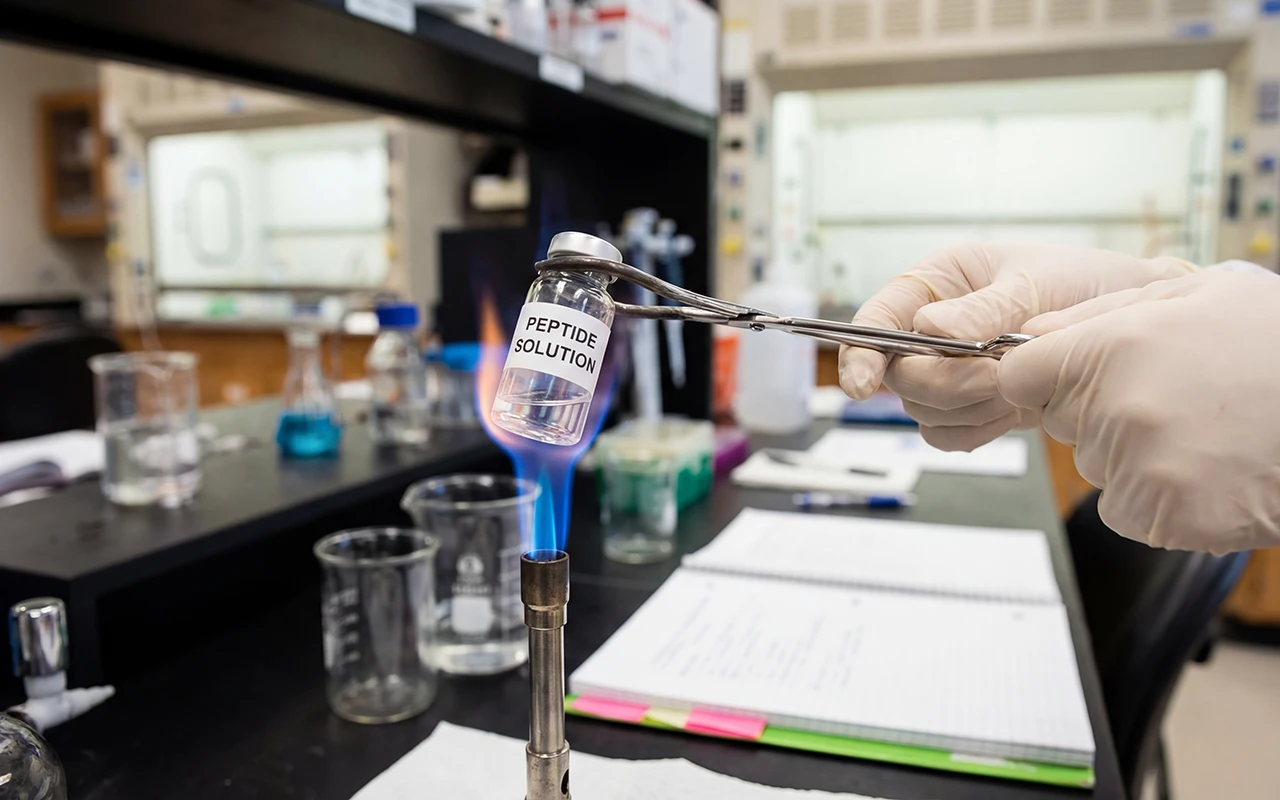
Peptides are fragile amino acid chains. They are held together by bonds that are thermodynamically unstable. The number one enemy of these bonds? Heat.
The "Sock Drawer" Vendor Problem
The barrier to entry for selling peptides is low. Anyone can order a batch from China, print some labels, and set up a website.
The problem is storage. We have audited several UK suppliers and found that many store their stock in:
- Residential garages (subject to summer heat spikes).
- Self-storage units (no climate control).
- Office drawers at room temperature (21°C+).
If a peptide vial sits at room temperature for 6 months before you buy it, it hasn't "gone bad" in the sense that it is toxic—but it has degraded. A 5mg vial of BPC-157 might only contain 3mg of active peptide by the time it reaches you. The rest is broken amino acid fragments.
The Myth of Lyophilization
Vendors will tell you: "It's fine, it's freeze-dried powder (lyophilized), it's stable."
This is a half-truth.
Lyophilization does make peptides more stable than liquid, but it does not make them invincible. At temperatures above 25°C (which a Royal Mail van easily reaches in summer or in a sorting depot), the degradation rate accelerates exponentially.
What Is "Cold Chain" Logistics?
In the pharmaceutical world, "Cold Chain" means the product never leaves a temperature-controlled environment.
- Storage: Peptides should be stored in medical-grade freezers at -20°C. This essentially pauses time for the chemical bonds.
- Packing: They should be removed from the freezer only at the moment of packing.
- Shipping: They must be shipped in thermal-lined packaging to survive the 24-48 hour journey to your lab.
⚠️ The "Touch Test"
How do you know if your supplier is cutting corners?
When your package arrives, open it immediately.
1. Is it cold? or if the vial feels warm to the touch, the supplier does not use Cold Chain.
2. The Packaging: Did it come in a generic "Jiffy Bag" (bubble mailer)? Or a thermal silver-lined pouch?
If you are paying premium prices for "99% Purity," you deserve logistics that protect that purity. Don't settle for warm peptides.
The Verdict
If your research results have been inconsistent—sometimes it works, sometimes it doesn't—the variable might not be the dosage. It might be the delivery.
Demand Cold Chain. It is the only way to ensure that what is on the label is actually inside the vial.
Disclaimer: This article focuses on logistics and quality control standards. Always ensure your research materials are handled according to MSDS guidelines.